


Listrik Kita is an official Schneider Electric distributor that provides original and warranty-backed products for various electrical needs. One of the protection devices commonly used in electrical installations is an RCBO (Residual Current Circuit Breaker with Overcurrent Protection). This device combines protection against residual current and overcurrent in a single unit. To make sure it works properly when a fault occurs, the RCBO should be tested regularly and correctly.
Testing an RCBO does not mean creating a dangerous situation just to see whether it trips. There are proper testing methods designed to check its protection function without putting people at unnecessary risk. So, what is the correct way to test an RCBO?
How to Test an RCBO Correctly
1. Testing with the Test Button
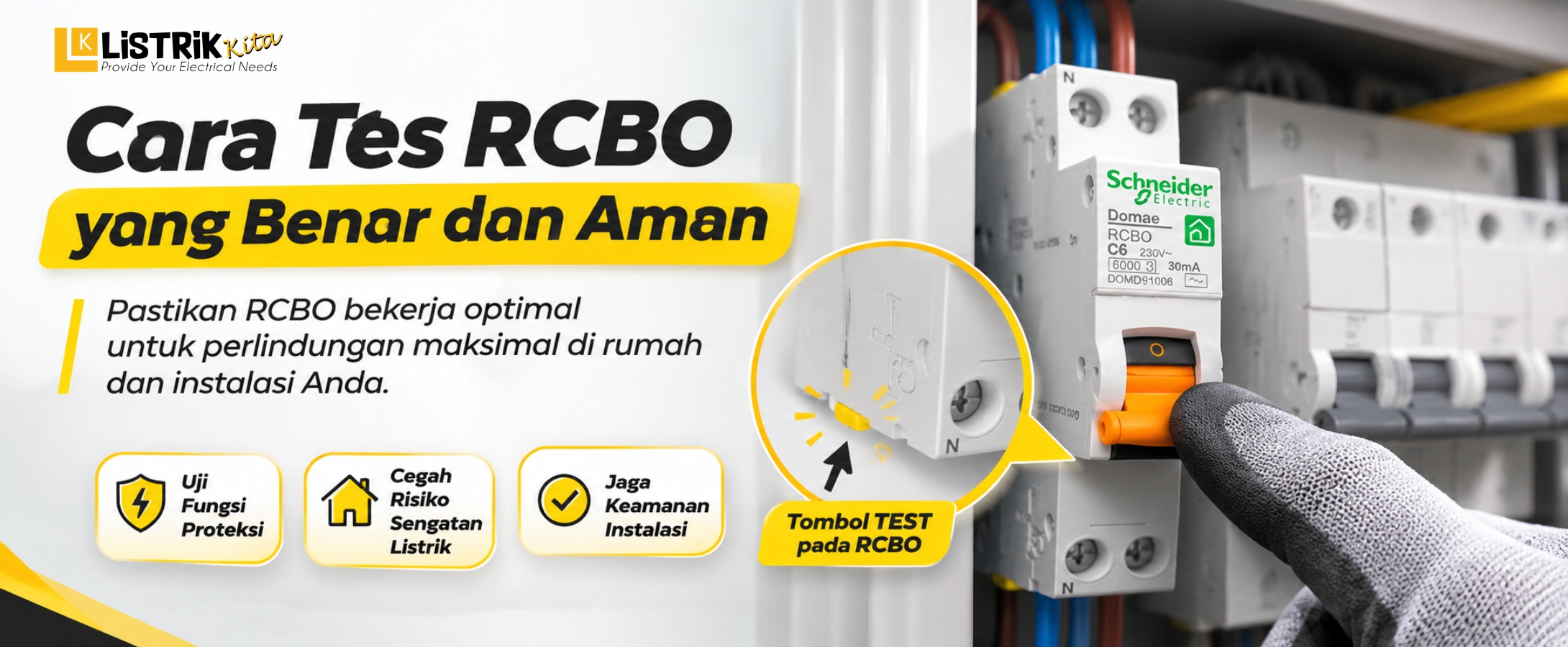
The simplest way to check an RCBO is by using the TEST button provided on the device. This button is specifically designed to check whether the residual current protection mechanism is working.
Before testing, make sure the installation is safe and the RCBO has been installed correctly. Then, press the TEST button according to the manufacturer's instructions. If the RCBO is working properly, it should trip and disconnect the electrical supply from the protected circuit.
After the RCBO trips, check that the power to the circuit has actually been disconnected. If everything works as expected, the RCBO can be switched back to the ON position. The TEST button should be used periodically based on the manufacturer's recommendations or the maintenance procedure for the installation.
If the RCBO does not trip when the TEST button is pressed, do not assume that the device is safe to use. There may be a problem with the RCBO, its installation, or the related circuit. Further inspection should be carried out by a qualified technician.
2. Simulating Leakage Current to Ground
In addition to using the TEST button, the RCBO can be checked by simulating leakage current with a suitable testing instrument. This method checks whether the RCBO can detect a current imbalance that indicates leakage to earth or ground.
During this test, a dedicated testing device is used to create a controlled leakage current in the circuit. When the leakage current reaches the required level based on the RCBO's characteristics, the device should trip and disconnect the electrical supply.
Testing with a dedicated instrument provides a more measurable assessment than simply pressing the TEST button. However, this method should be performed by someone who understands electrical installations and knows how to use the appropriate testing equipment because the test involves an energized circuit.
The grounding system should also be checked. Proper grounding supports the protection system and is an important part of electrical installation safety.
Important Things to Consider When Testing an RCBO
Never Test an RCBO Using Your Body
One of the most important rules is never use your body to test an RCBO. For example, intentionally touching a live part to allow current to flow through your body is extremely dangerous.
This can cause serious electric shock, burns, or even life-threatening injuries. An RCBO is designed to provide protection against residual current, but that does not mean the human body should ever be used as a testing method.
Always use the TEST button or a dedicated testing instrument designed for RCBO testing. Safety should always come first when working with electrical installations.
Check the RCBO Installation
The RCBO installation should also be checked. Make sure the cables and terminals are connected according to the manufacturer's wiring diagram. Incorrect wiring can prevent the protection system from working properly.
Check the line and neutral connections and make sure the grounding system is available and properly installed. Do not perform testing if you find damaged cables, loose terminals, exposed conductive parts, or any other condition that could create a safety hazard.
Make Sure the Installation Is Safe Before Testing
Before testing, inspect the electrical panel and installation. Use suitable testing equipment and avoid touching energized parts of the installation.
For more detailed inspections, especially tests using measuring instruments, it is better to have the work carried out by a qualified electrical technician. There is no reason to take unnecessary risks just to check whether a protection device is working.
What to Do If the RCBO Does Not Work?
The RCBO Does Not Trip When the TEST Button Is Pressed
If the RCBO does not trip when the TEST button is pressed, stop using the device until the cause has been identified. Check the installation and circuit condition. If there is no obvious issue, have the RCBO inspected by a qualified technician or replace it if it is no longer functioning properly.
The RCBO Trips Frequently Without an Obvious Reason
An RCBO that trips frequently should not immediately be considered faulty. It may indicate leakage current, excessive load, a problem with an electrical appliance, or an issue within the installation.
Do not simply disable the protection function just to keep the electricity running. Find the cause of the trip first so the problem can be addressed without reducing the safety of the installation.
Regularly testing an RCBO is an important step to make sure the protection device can work properly when needed. Testing can be done using the TEST button or by simulating leakage current with suitable testing equipment. However, never use your body as a testing method, and always check the RCBO installation and grounding system before carrying out an inspection.
If you are looking for original and warranty-backed Schneider Electric RCBO products, Listrik Kita provides various products for residential, commercial, and project electrical installations. Find and buy Schneider Electric RCBO at Listrik Kita to get the right protection solution for your electrical installation.
